
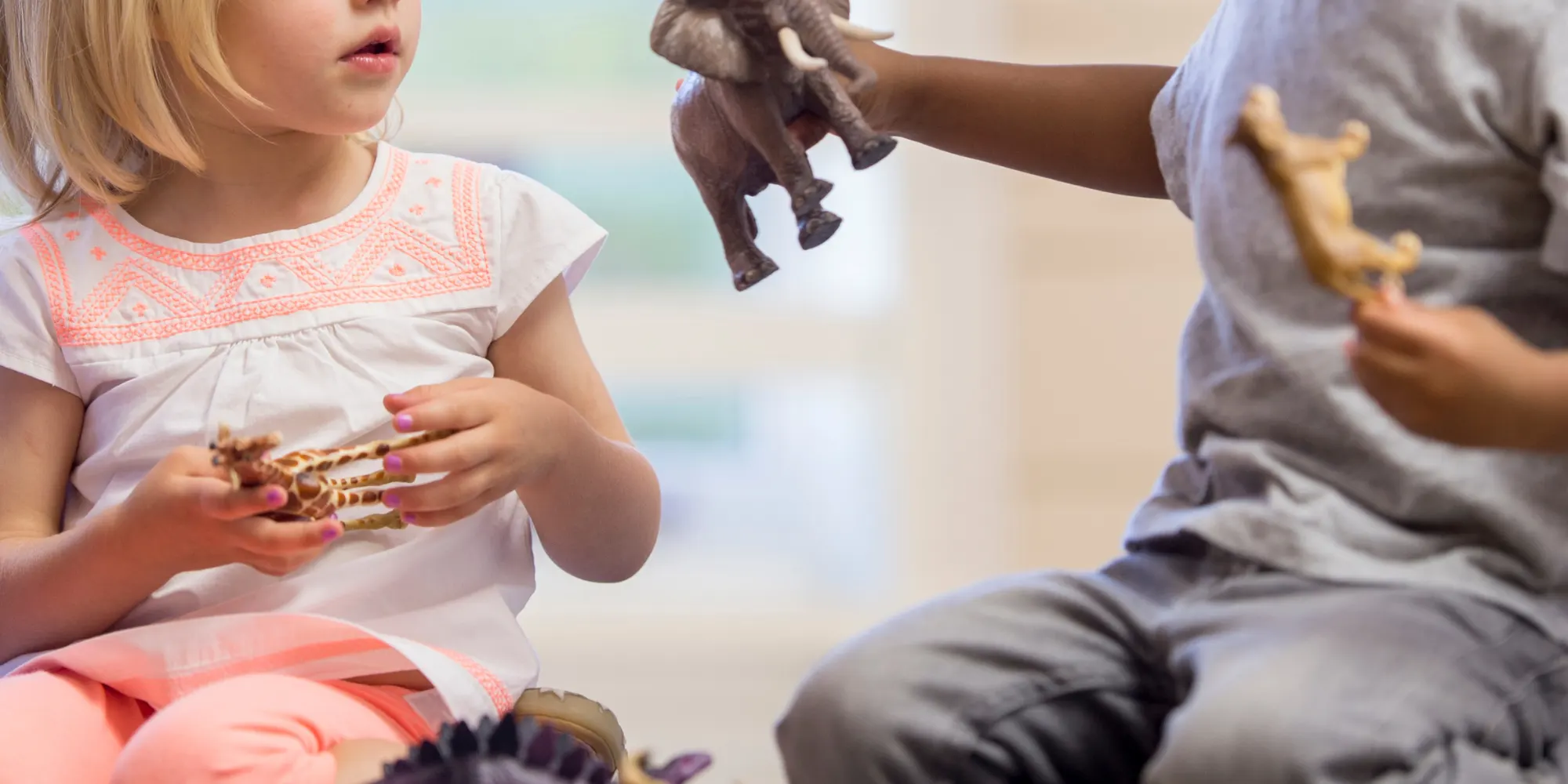
Picture two toddlers in a room filled with colorful toys. There are blocks, puzzles, cars, dolls, and approximately 75 perfectly good things to play with. Naturally, both children decide they absolutely must have the same plastic truck.
If you’ve spent time around young children, you’ve probably witnessed this familiar scene. Sharing can be one of the trickiest social skills for toddlers, and it’s easy to wonder why something so simple seems so difficult.
But sharing isn’t actually simple when you’re two years old. It requires several developmental skills that children are still learning.
Sharing Is More Complicated Than It Looks
To share successfully, a child needs to recognize that someone else wants something, manage their own disappointment, and understand that taking turns doesn’t necessarily mean losing a toy forever.
These skills involve empathy, communication, patience, and emotional regulation. That’s a pretty impressive combination for someone who only recently learned how to put on their own shoes.
Young toddlers are also still developing an understanding of ownership and other people’s perspectives. They may struggle to recognize why another child wants the same toy or why they should have to stop playing with something they enjoy.
Rather than expecting perfect sharing, it’s more helpful to view these moments as opportunities for learning.
Teaching Turn-Taking Without Forcing It
One way to support sharing is to focus on taking turns. Instead of immediately asking a child to hand over a toy, adults can explain what’s happening and help both children understand the situation.
For example, “You’re playing with the truck right now. When you’re finished, your friend can have a turn.”
This approach acknowledges both children’s feelings while introducing the idea that toys can be enjoyed by more than one person.
Adults can also model cooperative behavior during everyday activities. Taking turns adding blocks to a tower, rolling a ball back and forth, or working together on a puzzle gives children opportunities to practice without the pressure of giving up a favorite possession.
And when disagreements happen, they can become valuable moments for practicing communication and problem-solving.
Growing Social Skills Through Play
At Kidz Watch, social development is an important part of early childhood learning. Through play and interaction with other children, toddlers and preschoolers have opportunities to practice cooperation, communication, and navigating different social situations.
Our use of The Creative Curriculum supports whole-child development, recognizing that learning how to interact with others is just as meaningful as developing early academic skills.
Children aren’t expected to master these abilities overnight. They need time, practice, and guidance as they begin understanding friendships and relationships.
So if your toddler isn’t quite ready to share every toy they own, don’t panic. They’re still learning how the social world works.
And honestly, that plastic truck must be pretty special.
Interested in a childcare environment that supports social-emotional development? Learn more about Kidz Watch’s toddler and preschool programs.