
Ask a preschooler what they did today, and there’s a good chance you’ll get one of two answers: “Played” or the ever-informative “Nothing.”
But somewhere between building a block tower, pretending to run a restaurant, and creating a painting that seems to involve every color except the one they originally asked for, a surprising amount of learning may have happened.
That’s because young children don’t separate learning and play the way adults often do. For them, exploring the world is how they begin making sense of it.
A Lot Happens During Playtime
Consider something as simple as building with blocks. Children are experimenting with balance, shapes, sizes, and spatial relationships. They’re testing ideas, solving problems, and learning what happens when their plans don’t quite work.
When another child joins the activity, the learning becomes even more complex. Now they’re practicing communication, cooperation, and negotiating different ideas. They might need to share materials, explain their plans, or work through a disagreement about who gets to build the tallest tower.
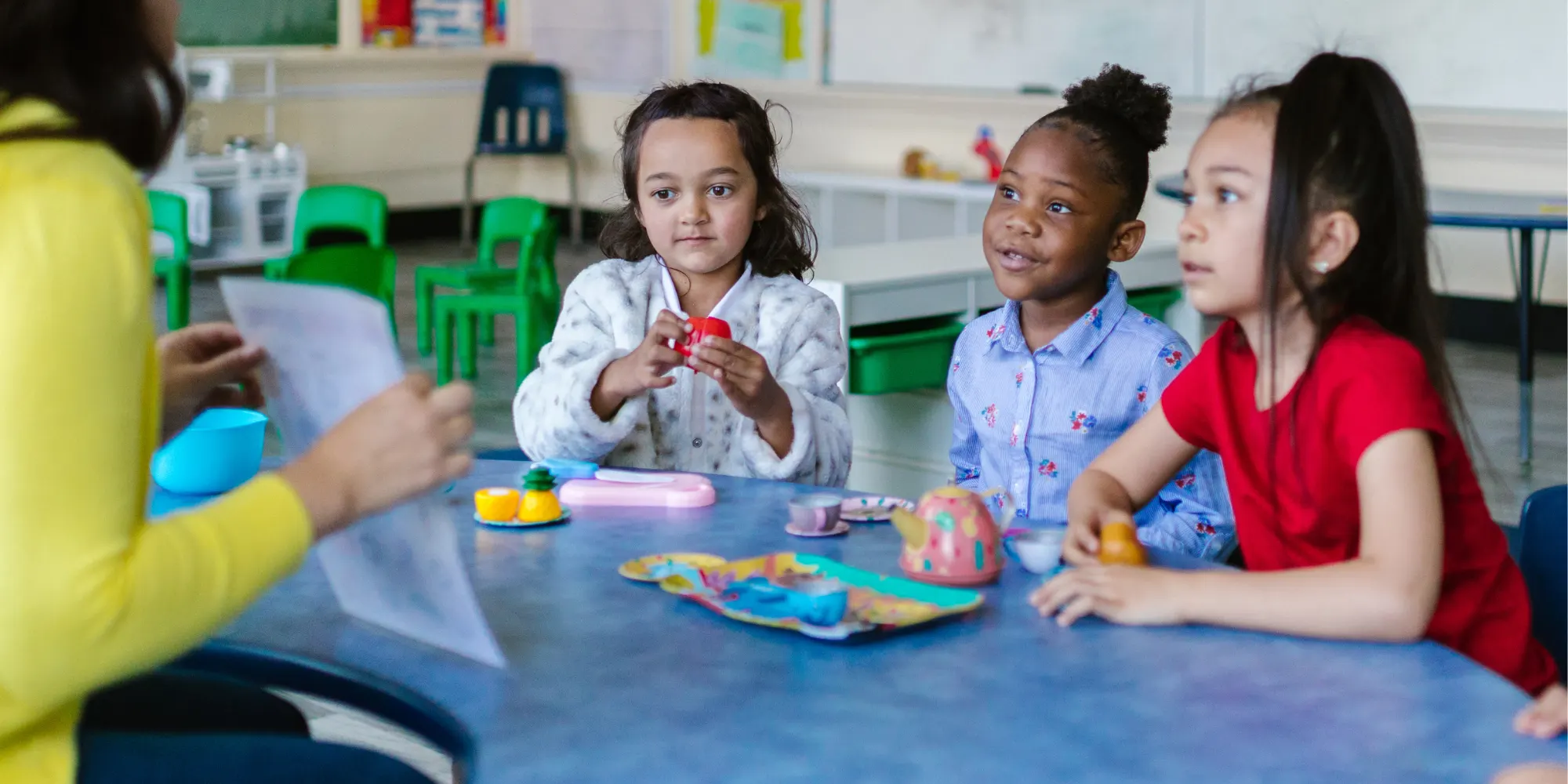
Pretend play offers similar opportunities. A make-believe grocery store can involve counting, sorting, vocabulary, storytelling, and social interaction, all within an activity children genuinely enjoy.
These experiences help build foundational skills without requiring every moment to look like a traditional classroom lesson.
Why Intentional Play Matters
Not all play experiences need to be directed by adults, but thoughtful guidance can help extend children’s learning.
A teacher might introduce new materials, ask an open-ended question, or encourage children to think about a problem differently. Instead of immediately showing a child how to fix a falling block tower, they might ask, “What do you think would make it stronger?”
Questions like these encourage children to experiment, explain their thinking, and develop confidence in their ability to solve problems.
The goal isn’t to turn every playful moment into a lesson. It’s to recognize opportunities for learning and support them in ways that feel natural and engaging.
The Creative Curriculum at Kidz Watch
At Kidz Watch, we use The Creative Curriculum, an early childhood approach that emphasizes hands-on exploration, discovery, and developmentally appropriate learning experiences.
This approach recognizes that children develop across several connected areas, including language, early literacy, math, physical coordination, social-emotional skills, and problem-solving.
Through purposeful play and intentional learning experiences, children have opportunities to build the foundations they’ll carry into kindergarten and beyond.
So when your preschooler proudly announces that they spent the entire day playing, don’t underestimate what that means.
They may have been building friendships, experimenting with new ideas, practicing important skills, and discovering something exciting about the world.
And honestly, that’s a pretty productive day.
Want to learn more about play-based preschool at Kidz Watch? Explore our preschool program and discover how The Creative Curriculum supports early childhood development.